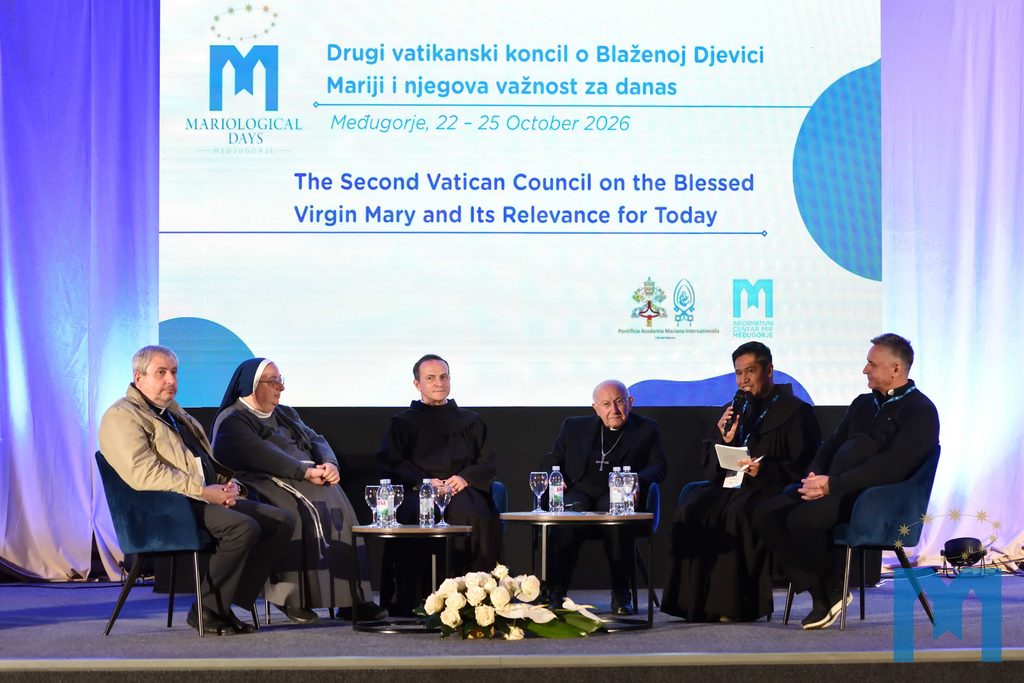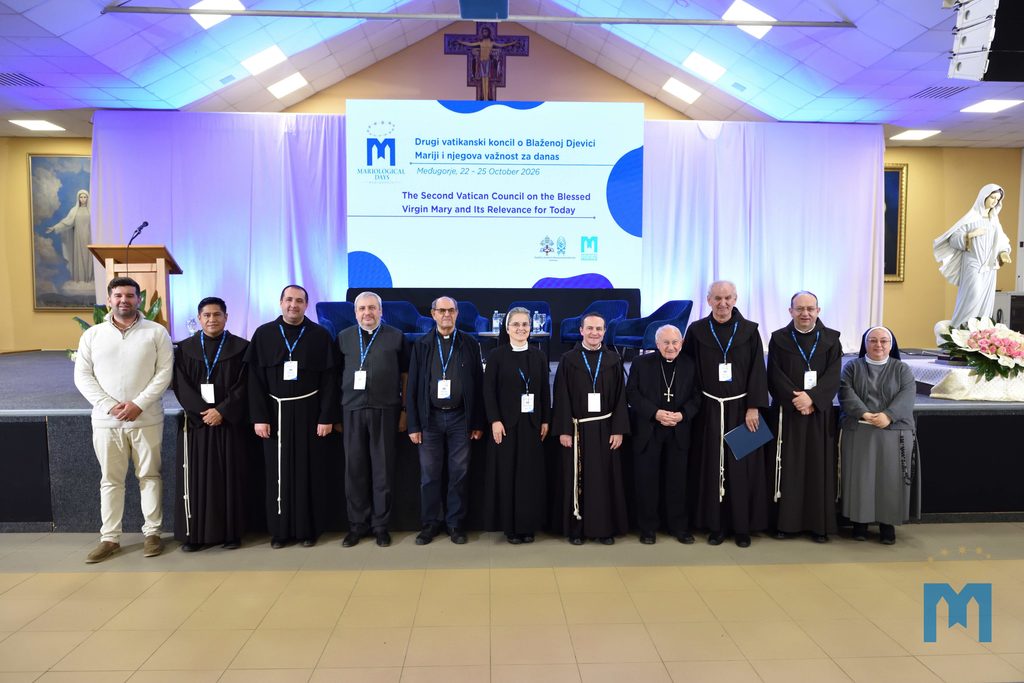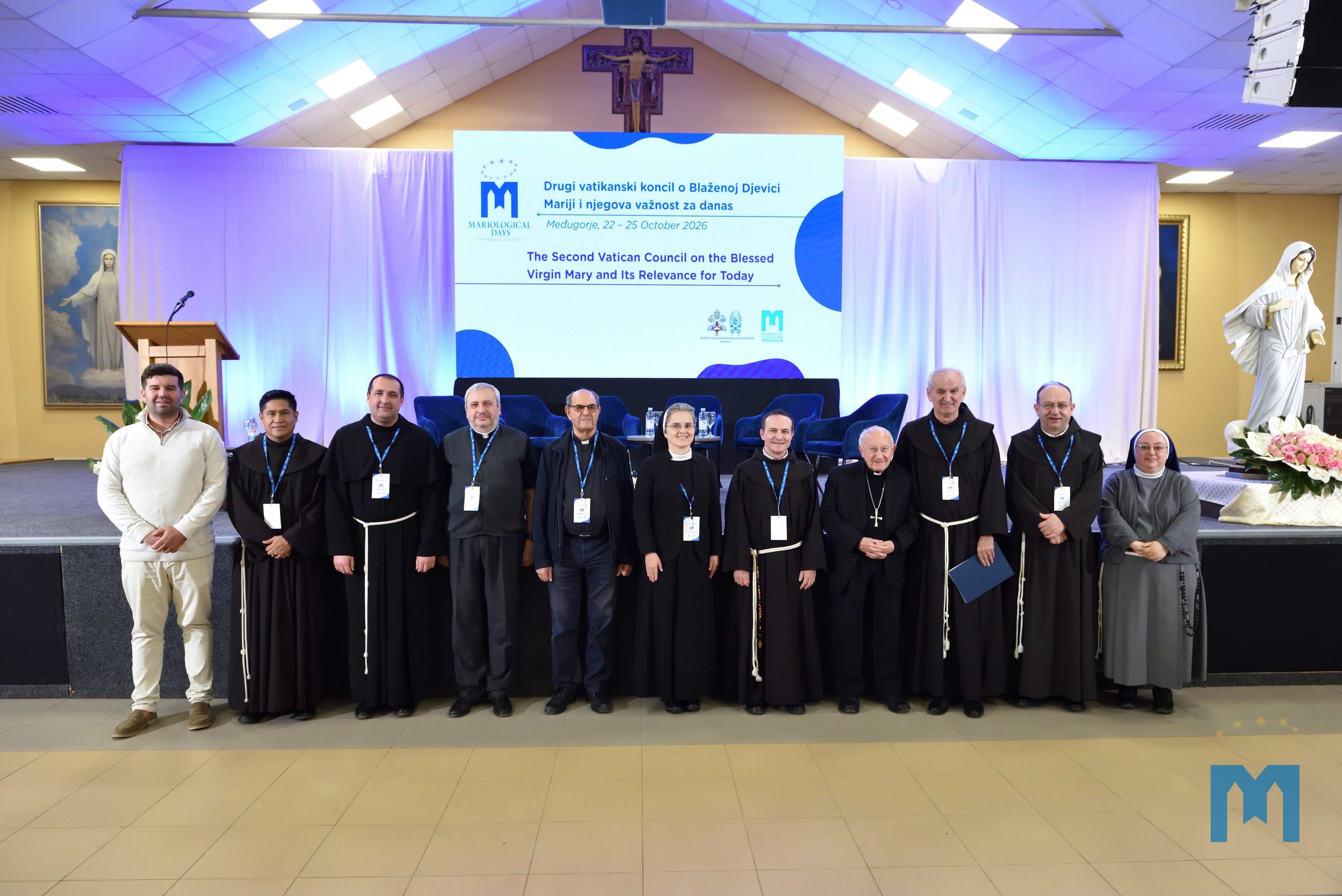
“The Second Vatican Council on the Blessed Virgin Mary and Its Relevance Today” was the central theme of the first Mariological Days held in Međugorje from October 22 to 25, 2026. The event was organized by the Parish of St. James in Međugorje, the “Mir” Međugorje Information Center (ICMM), and the Pontifical International Marian Academy (PAMI) of the Holy See.
In addition to opening remarks, delivered by PAMI President Fr. Stefano Cecchin, Parish Priest Fr. Zvonimir Pavičić, ICMM Director Vedran Vidović, and Bishop Msgr. Petar Palić, as well as the Eucharistic celebrations led by Fr. Zvonimir Pavičić, Fr. Miljenko Šteko (Guardian of the San Antonio International Friary), Fr. Stefano Cecchin, and Provincial Minister Fr. Jozo Grbeš, the Mariological Days featured an extensive working program. This included twelve presentations, one workshop, two panel discussions, and a formal closing session.
The initiator of the Mariological Days, the Apostolic Visitor for the Parish of Međugorje, Msgr. Aldo Cavalli, delivered an introductory lecture on Thursday, addressing the importance of religious and theological formation for pilgrims in Međugorje. He discussed the significance of the Second Vatican Council for the Church in the 21st century, with a particular focus on Chapter VIII of the Dogmatic Constitution Lumen Gentium, which contains the Church’s teaching on the Blessed Virgin Mary, a teaching that remains authoritative for believers today. Fr. Danko Perutina, the President of the ICMM, delivered the second introductory lecture, titled “The Importance of the Blessed Virgin Mary for a Life of Faith: The Church’s Magisterium and Existential Challenges.” He emphasized that the Blessed Virgin Mary holds a unique place in the lives of believers and the Church; however, she is not a substitute for Jesus Christ, but rather His Mother, His first disciple, and a model for the Christian life. Through various perspectives, he presented Mary as a response to the diverse existential situations faced by contemporary humanity.
The first lecture on Friday, the second day of the “Mariological Days”, was delivered by Fr. Stefano Cecchin, President of the PAMI. He explained the shift in perspective introduced by the Second Vatican Council regarding the mariology that had preceded it. Through fifteen distinct themes, he demonstrated the ongoing relevance of the Council’s mariology for the present day, across various dimensions of the Church’s mission and theology. He concluded by citing Pope Leo XIV, who affirmed that the Church has a need for mariology, a discipline that should be present within the academic institutions, shrines, parish and religious communities, as well as various associations and movements. In his presentation, titled “Mary in the Mystery of Jesus Christ: Do We Need Mary If We Have Jesus Christ the Savior?”, Fr. Gian Matteo Roggio, a professor at the Pontifical Theological Faculty Marianum in Rome, examined the theological significance of Mary’s role within the mystery of salvation. He focused on Mary’s salvific influence upon humanity, which is a fruit of the merits of Christ (Lumen Gentium 60). He further interpreted Mary’s participation in the economy of salvation through the lenses of relationship and motherhood within the order of grace. Sr. Daniela Del Gaudio, a professor at the Pontifical Athenaeum Regina Apostolorum and the Pontifical Theological Faculty of St. Bonaventure, spoke on the “Mariotypical” ecclesiology of the Second Vatican Council. Drawing upon Lumen Gentium (nos. 63 and 64), she highlighted that the Church recognizes in Mary its own archetype and the model for its own realization. She explained the theological significance of Mary’s motherhood, virginity, and spousal relationship as the fundamental characteristics of her bond with both Christ and the Church.
Fr. Mladen Parlov, Head of the Department of Dogmatic Theology at the Catholic Faculty of Theology in Split, addressed the topic: “Between Rationality and Credulity: How Should We Honor the Blessed Virgin Mary Today?” He warned against two extremes that threaten the authenticity of Marian devotion: rationalism, which impoverishes the mysterious dimension of faith, and credulity which uncritically accepts extraordinary religious phenomena. He emphasized that true devotion to the Blessed Virgin Mary must be grounded in the truths of faith, in a complementary relationship between reason and piety, and in the imitation of Mary’s life.
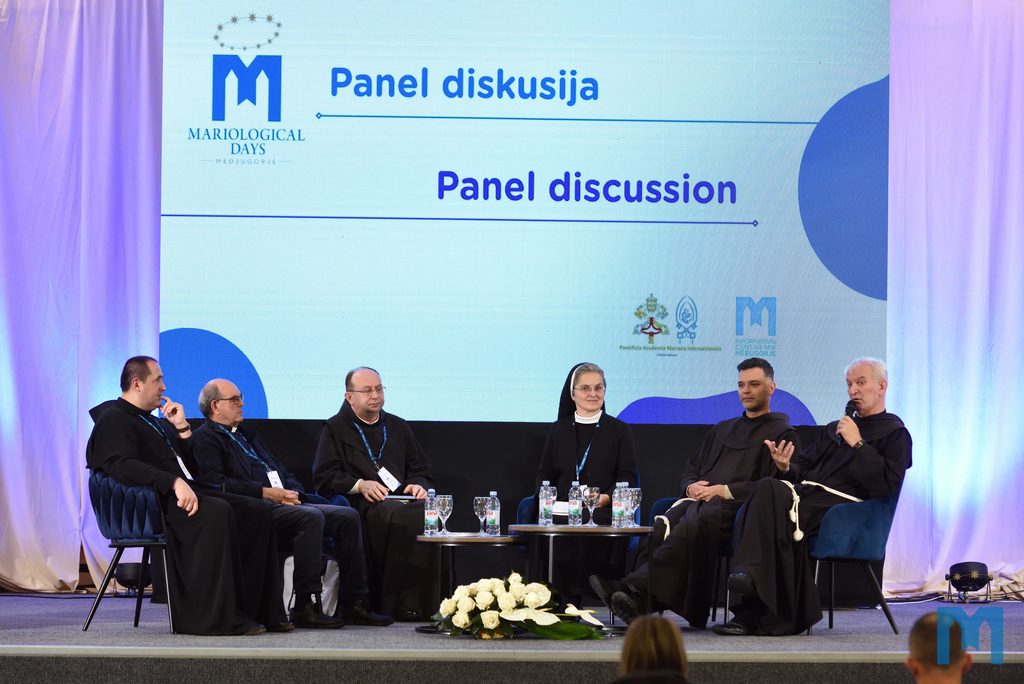
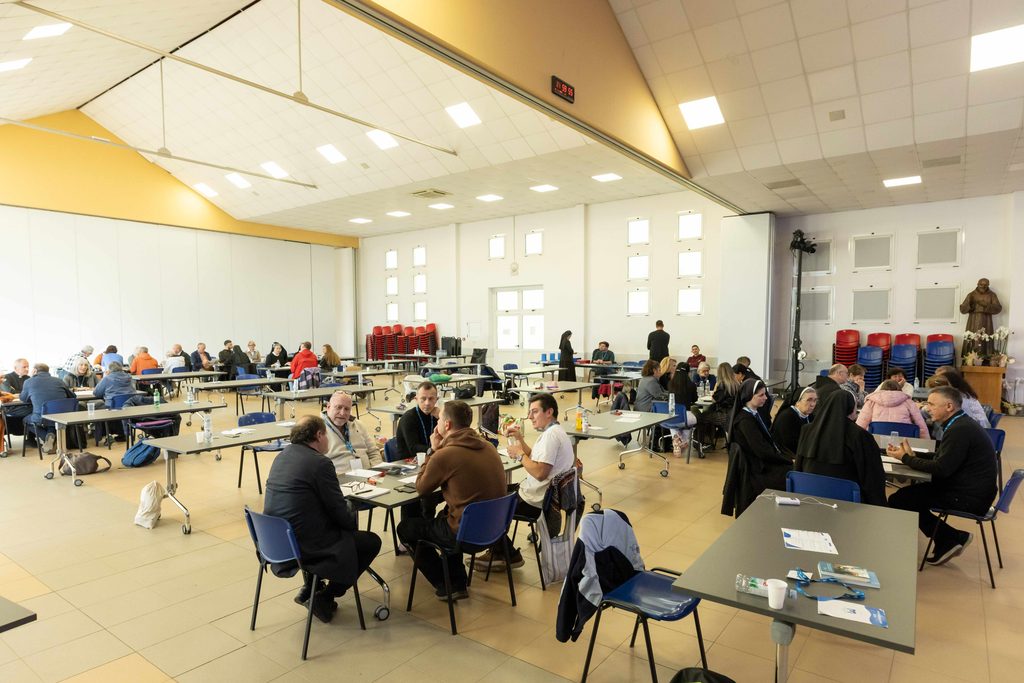
During the afternoon session of the second day, a workshop consisting of ten groups was held, in which participants deepened their understanding of selected texts from the constitution Lumen Gentium and presented how these texts are applied within the specific countries and cultures from which they come. The second day also featured the first round-table discussion, moderated by PAMI Secretary Friar Marco Mendoza. The central question addressed was the extent to which Mariological formation is present within theological studies across different regions of the world. It was concluded that, while there is a noticeable marginalization of Mariological subjects in theological curricula, there is simultaneously a recognized need to provide Mariological instruction for the faithful in general.
The third day of the Mariological Days, Saturday, was opened by Fr. Milan Gelo, a postdoctoral researcher at the Department of Dogmatic Theology at the Catholic Faculty of Theology in Zagreb. He presented Mary, who “advanced in her pilgrimage of faith” (Lumen Gentium 58), as a companion through the crises of our time. He emphasized that Mary’s faith deepened through her concrete life experiences. Consequently, Mary can serve as a companion to people facing various crises, as she herself traversed a path marked by uncertainty, searching, and suffering, demonstrating that Christian faith, above all, signifies steadfast trust in God. Sr. Valerija Kovač, the program coordinator for the Mariological Days, explored the question of what kind of future is revealed to us by Mary, whom the Council presents as a “sign of sure hope and solace” for the People of God (Lumen Gentium 68). She presented the eschatological dimension of conciliar Mariology, with an emphasis on the most recent Marian dogma – the Assumption of Mary into heaven, and on the future as a state of salvation.
Fr. Miljenko Šteko, Guardian of the international friary of San Antonio in Rome, interpreted the Medjugorje phenomenon in the light of the Second Vatican Council and contemporary ecclesial discernment, presenting the event itself, its message, and its fruits as criteria for interpretation. He emphasized that Medjugorje should be understood as a space for renewed listening and a deeper acceptance of the unique revelation realized in Jesus Christ, rather than as the site of some new revelation. In principle, he highlighted the importance of ecclesial discernment, the Christological focus of Marian devotion, and the role of pilgrimages as a path toward deepening one’s faith. Fr. Mijo Nikić, a member of the International Commission of Inquiry on Medjugorje, presented the theological significance of Marian apparitions in light of the Second Vatican Council. He particularly stressed that while the definitive revelation took place in Jesus Christ, this does not mean that the Church has already exhausted the depth of its understanding. He noted that the authentic Marian apparitions must not become an end in themselves; rather, they should serve to deepen faith and direct the faithful toward Jesus Christ.
“Mary, a Path of Peace Among Cultures: From Conciliar Renewal Toward a New Mariological Path” was the title of a presentation by Fr. Marco Mendoza, Secretary of the PAMI (Pontifical International Marian Academy), who explored the significance of Mary in the context of the encounter between different cultures. As a new mariological approach, he proposed the figure of the Virgin Mary as a link fostering peace and communion among cultures, something highly needed in today’s world.
In the year marking the 800th anniversary of the death of St. Francis, the Provincial of the Franciscan Province of Herzegovina, Fr. Jozo Grbeš, presented the Franciscan perspective on Mary. He drew connections between the spiritual experience of St. Francis, the mystical-theological thought of St. Bonaventure, and the speculative theology of John Duns Scotus, emphasizing that the primacy of God’s love lies at the heart of the Franciscan theological tradition – a perspective through which he then discussed Mary.
On the third day, Sr. Valerija Kovač moderated a second round-table discussion, in which the speakers addressed concrete issues concerning the veneration and figure of the Virgin Mary for people today. They also discussed positive examples of Marian spirituality and devotion among the faithful. The working sessions of the “Mariological Days” concluded ceremoniously on Saturday evening with a speech of gratitude by the parish priest, Fr. Zvonimir Pavičić, and closing remarks by Msgr. Aldo Cavalli, who presented certificates of participation to all those in attendance.
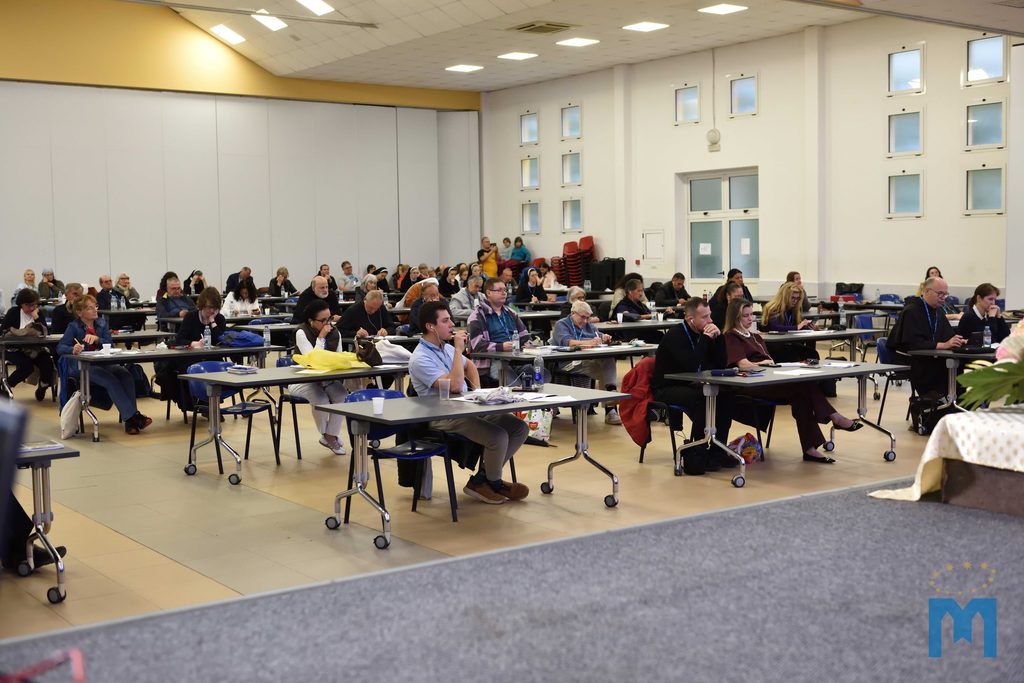
The first “Mariological Days” in Međugorje brought together ninety participants. The majority came from Croatia, Bosnia and Herzegovina, and Italy, with others arriving from the United Kingdom, Germany, Austria, Portugal, Hungary, Poland, Slovakia, Ukraine, Brazil, Venezuela, El Salvador, Paraguay, and the United States. They expressed great satisfaction with the organization of a gathering of this nature in Međugorje and expressed a wish for it to continue in the future.
Sr. Valerija Kovač